
The Landlord and the Local
The Salt PathEncounters with estates, holiday development, and displaced residents show how ownership shapes access to land and housing, complicating the coastal idyll with questions of class and control.
increasing Bearing strength in each event
 decreasing
Bearing strength in each eventdecreasingClovelly’s Owned Village
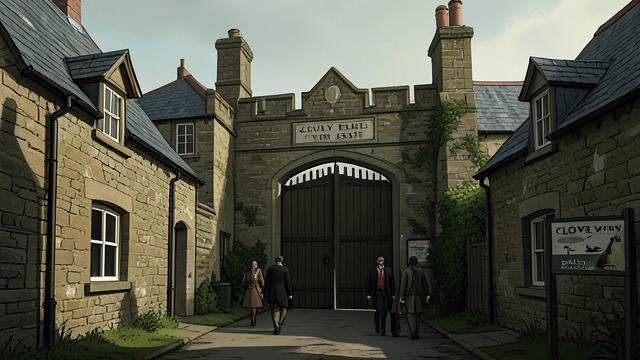
Clovelly’s Owned Village
A picturesque place with a gate
Ray observes that Clovelly is controlled as an estate, with houses owned and rented by the estate company. The steep, beautiful village attracts visitors, but the couple struggle to find affordable food there.
The scene connects tourism with concentrated ownership. An idyllic landscape can be welcoming to visitors while remaining economically restrictive to those who live or travel through it.
A Local Boy’s Resentment
A Local Boy’s Resentment
Class is visible from below
A young worker tells Ray and Moth that the village belongs to a wealthy owner and that ordinary workers receive little from the estate economy. He plans to join the army partly to leave the place.
His account gives the postcard setting a local perspective. Tourism brings money and jobs, but it does not guarantee that residents share in the wealth of the place they inhabit.
The Farm Requisitioned at Tyneham
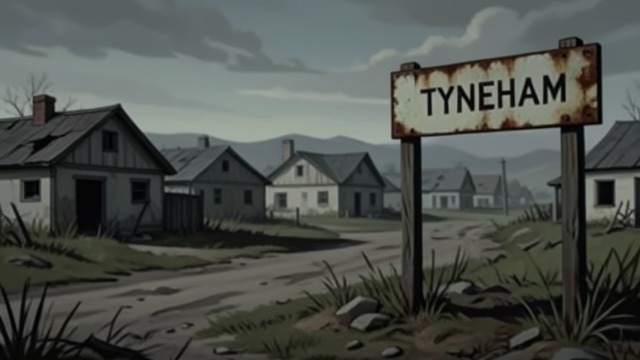
The Farm Requisitioned at Tyneham
Home used for military purposes
Ray and Moth pass Tyneham, whose residents were displaced when the army requisitioned the village during the war. The land remains under military control, and visitors see the abandoned settlement as a historical site.
The story echoes the couple’s own forced loss of home, while differing greatly in cause and scale. It raises questions about who has the authority to remove people and what a community loses when its place is taken.
Shacks on Whitsand Bay
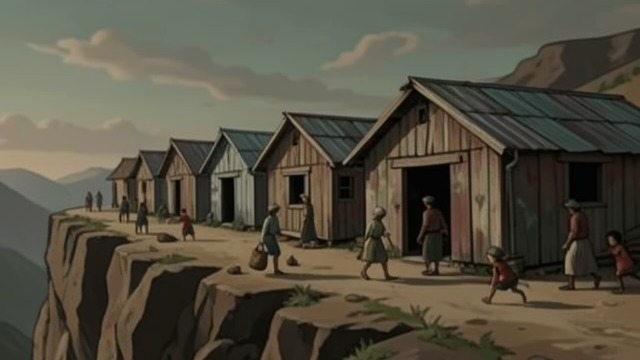
Shacks on Whitsand Bay
Informal homes endure
An older resident explains that families built shacks on rented cliff plots after the wars, including people displaced by bombing. Generations have stayed, though many sites have since become holiday homes.
The history shows that informal shelter can become a lasting home when people are allowed to remain. It contrasts local need with the broader conversion of coastal places into leisure properties.
A Home Offered Outside the Market
A Home Offered Outside the Market
Housing through human trust
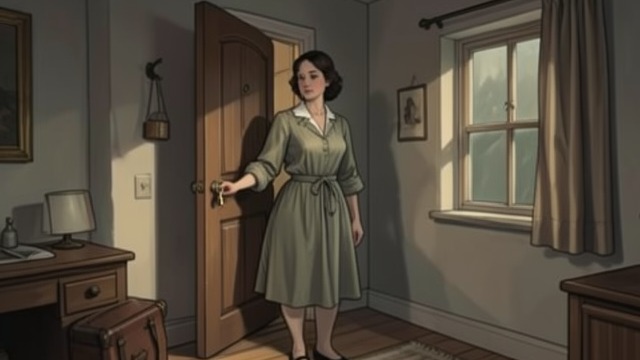
Anna offers the couple a flat before advertising it, judging them as people rather than relying only on a rental application. Her decision gives them access to housing despite the damaged credit history that had blocked other options.
The offer shows the power of personal trust in a housing system that often excludes those most in need. It provides a practical alternative to continued homelessness.
During the couple’s hungry approach to Clovelly
During the stop at Clovelly Harbour
During the second journey through Dorset
During the later passage near Rame Head
Near Talland Bay at the end of the journey
